
Struggling With Grooming Time? Solutions for Pet Grooming Behavior Problems
PET GROOMING BEHAVIOR PROBLEMS
Fluffy Tails Admin
1/9/2026
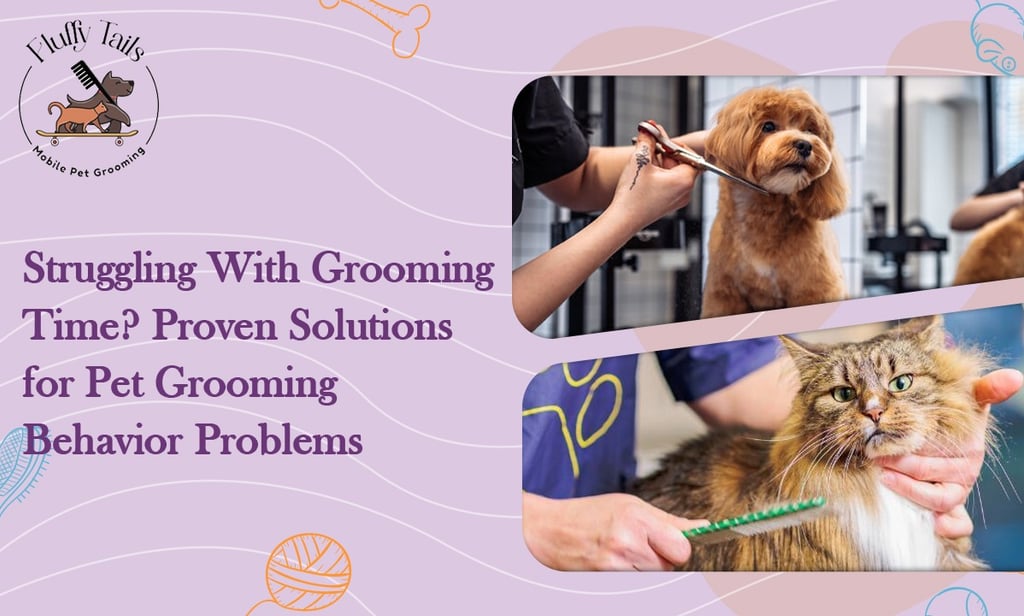
Grooming is a vital part of keeping your pet healthy, clean, and comfortable, yet for many pet parents, it can quickly turn into a stressful struggle. If your dog or cat resists brushing, panics during baths, or becomes aggressive when grooming tools come out, you’re not alone. Grooming behavior problems are common and often rooted in fear, anxiety, or discomfort rather than disobedience. Understanding these behaviors and using proven solutions can transform grooming time into a calmer, more positive experience for both you and your pet.
Understanding Pet Grooming Behavior Problems
Why Pets Resist Grooming
Pets may resist grooming for several reasons. Loud noises from clippers, unfamiliar smells, water sprays, or being physically restrained can make them feel threatened. Pets with past negative grooming experiences may associate grooming with pain or fear. Additionally, underlying issues such as skin infections, joint pain, or matted fur can make grooming physically uncomfortable, increasing resistance.
Common Grooming Triggers in Pets
Some of the most common grooming triggers include electric clippers, nail trimmers, running water, slippery floors, and unfamiliar handling of sensitive areas like paws, ears, or tails. Even changes in routine or environment—such as grooming in a new location—can trigger anxiety, especially in sensitive pets.
Common Grooming Behavior Issues
Fear, Anxiety, and Aggression During Grooming
Fear is one of the most frequent causes of grooming-related aggression. Pets may growl, snap, hiss, or attempt to bite when they feel cornered or overwhelmed. This behavior is often a defensive response rather than aggression by nature. Recognizing early signs of stress, such as trembling, panting, flattened ears, or avoidance, can help prevent escalation.
Restlessness and Excessive Movement
Some pets constantly move, pull away, or try to escape during grooming. This restlessness can make grooming difficult and unsafe, increasing the risk of accidental cuts or injuries. Excessive movement is usually a sign of anxiety or overstimulation.
Sensitivity to Touch or Grooming Tools
Many pets are sensitive to certain grooming tools or body areas. Rough brushes, dull clippers, or incorrect techniques can cause discomfort. Pets with allergies, skin conditions, or joint pain may react strongly to touch, making gentle handling essential.
Proven Solutions for Grooming Behavior Problems
Gradual Desensitization Techniques
Gradual desensitization is one of the most effective ways to reduce grooming stress. Start by introducing grooming tools slowly without using them. Allow your pet to sniff and inspect brushes or clippers. Begin with short grooming sessions lasting just a few minutes and gradually increase the duration as your pet becomes more comfortable.
Positive Reinforcement and Reward-Based Training
Positive reinforcement plays a key role in improving grooming behavior. Reward calm behavior with treats, praise, or playtime. Over time, your pet will associate grooming with positive experiences rather than fear. Consistency is important—reward good behavior every time.
Choosing the Right Grooming Tools
Using the right tools can significantly reduce stress. Choose brushes and combs suited to your pet’s coat type, and opt for quiet, low-vibration clippers. Always use pet-safe grooming products designed for sensitive skin to avoid irritation.
DIY Grooming Tips to Reduce Stress
Creating a Calm Grooming Environment
Groom your pet in a quiet, familiar space free from loud noises and distractions. Non-slip mats help pets feel secure and prevent slipping. Speak in a calm, reassuring tone and take breaks if your pet becomes overwhelmed.
Best Time and Frequency for Grooming
Timing matters. Groom your pet when they are naturally calm, such as after a walk or play session. Frequent, short grooming sessions are more effective and less stressful than long, infrequent ones.
When to Seek Professional Grooming Help
Benefits of Professional Pet Groomers
Professional groomers are trained to handle anxious or difficult pets safely. They understand animal behavior and use proper techniques to minimize stress while delivering high-quality grooming results.
How Experts Handle Behavioral Challenges
Experienced groomers use gentle restraint, calming methods, and specialized tools to manage grooming behavior problems effectively. They can also identify underlying health issues that may be contributing to grooming resistance.
Making Grooming a Positive Experience for Your Pet
Grooming doesn’t have to be a battle. With patience, understanding, and the right techniques, you can turn grooming into a positive and stress-free routine. Whether grooming at home or seeking professional help, prioritizing your pet’s comfort and emotional well-being will lead to happier grooming sessions and a healthier, happier pet.
Struggling with grooming challenges? Let experienced professionals handle it with care.
Book a professional grooming session today and give your pet the comfort they deserve.